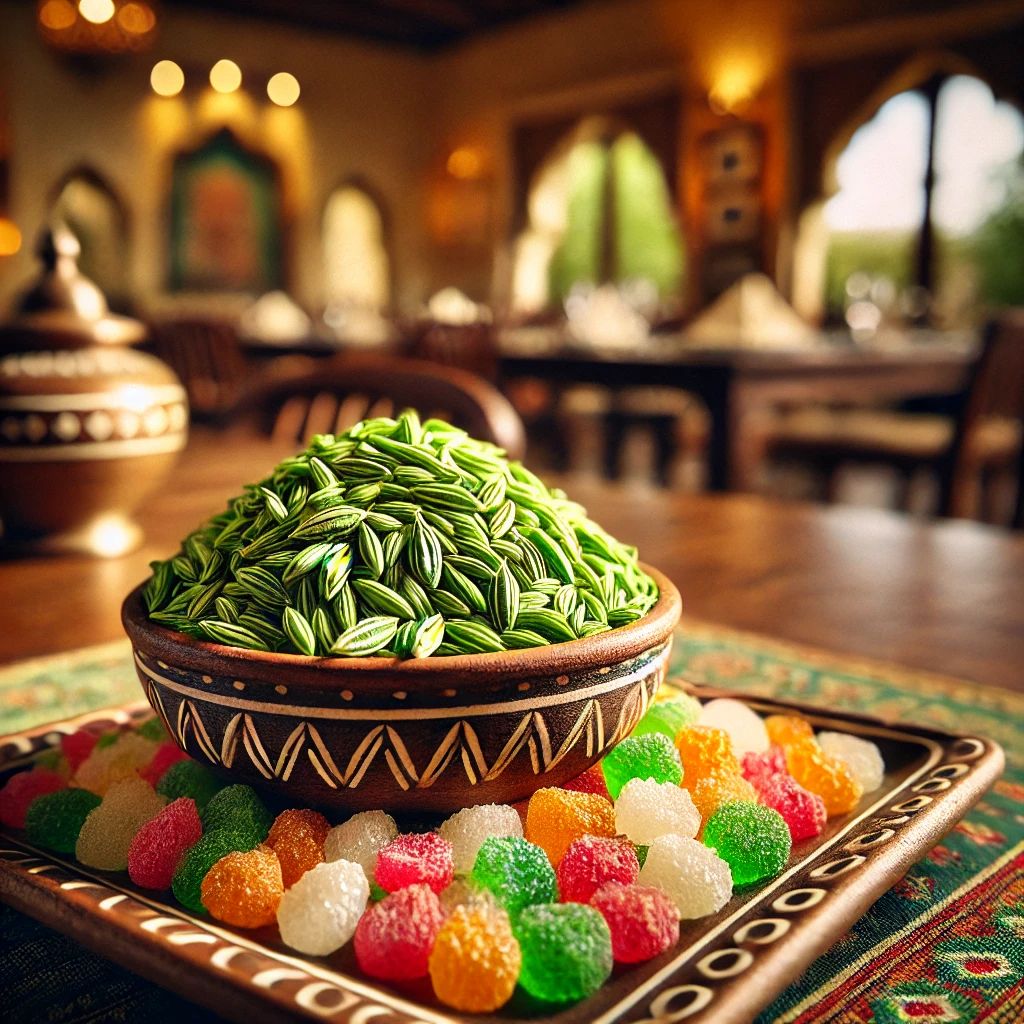
Saunf (fennel seeds) has been consumed after meals in India as part of a tradition since hundreds or thousands of years. This practice is not just a cultural norm but also deeply rooted in Ayurveda and traditional Indian practices for its numerous health and digestive benefits. From homes to restaurants and even grand weddings, offering saunf after a meal is a common sight across the country. It serves as a flavorful digestive aid, a natural mouth freshener, and an essential component of Indian culinary heritage.
—
The Cultural Significance of Saunf
The tradition of consuming saunf is prevalent across India and has been passed down through generations. It is often served mixed with sugar crystals (mishri) or coated with a sweet layer to enhance its taste. In many Indian households, keeping a small bowl of saunf on the dining table signifies hospitality. Offering it to guests post-meal is considered a gesture of care and respect.
In restaurants, saunf is presented along with the bill, marking the end of the dining experience. In weddings and festive celebrations, it is often provided in small decorative containers, signifying the host’s desire to ensure the guests leave with a pleasant and fresh aftertaste.
—
Health Benefits of Saunf
1. Digestive Aid:
Saunf contains essential oils and compounds like anethole, which stimulate the secretion of digestive juices, improving digestion. It helps alleviate issues such as bloating, indigestion, and acidity.
2. Mouth Freshener:
The aromatic properties of fennel seeds act as a natural breath freshener. It combats bad breath and leaves a refreshing taste in the mouth, making it an ideal post-meal choice.
3. Cooling Properties:
In Ayurveda, saunf is known for its cooling properties. It helps balance the body’s heat, making it especially beneficial in hot and humid climates.
4. Rich in Nutrients:
Fennel seeds are a good source of vitamins, minerals, and antioxidants. They help improve overall health, aid in detoxification, and boost immunity.
5. Regulation of Blood Sugar Levels:
Regular consumption of saunf can help regulate blood sugar levels, which is why it is recommended for people with diabetes.
—
Examples of Saunf Usage Across India
Homes: In households, a pinch of saunf is consumed after meals, either plain or mixed with mishri.
Restaurants: Many Indian restaurants serve colorful saunf mixtures or sugar-coated fennel seeds after the meal.
Weddings: Guests are often gifted packets or small jars of saunf as part of the wedding favors.
Ayurvedic Practices: Saunf tea or water is a common remedy for indigestion, widely consumed in both urban and rural India.
—
Conclusion
The tradition of consuming saunf after meals in India is a beautiful blend of culture, health, and taste. It is not just a simple habit but a reflection of India’s rich heritage and the value placed on hospitality and well-being. Whether enjoyed plain, with mishri, or as a sweet-coated treat, saunf continues to hold a special place in Indian households and hearts. Next time you relish this tradition, remember, it’s more than just seeds—it’s a legacy of care and wellness.

 Happy & Healthy Life